
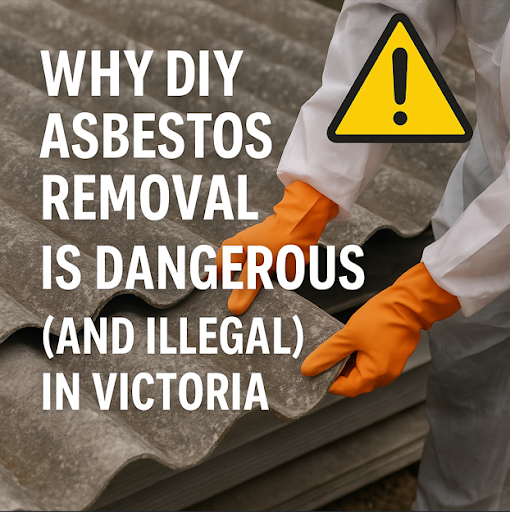
Asbestos is a group of natural minerals once widely used in construction across Victoria. It was valued for its strength, insulation, and fire resistance. But what many didn’t know was how dangerous it would become.
When asbestos materials are disturbed—like during renovations—fibres are released into the air. These fibres are invisible and deadly. You can’t smell or see them, but inhaling them could cause lifelong illness or even death.
Inhaling even a small amount of asbestos dust can lead to:
These diseases have long latency periods. That means symptoms often don’t appear for 20–40 years, making early prevention critical.
Many older homes and buildings across Victoria still contain asbestos in:
Even small renovations can uncover hidden asbestos. Simply drilling, sawing, or sanding can release fibres into the air.
Unfortunately, you can’t identify asbestos just by looking at it. Some materials that appear harmless may contain bonded asbestos. Others may look fibrous and dangerous, but are actually safe.
The only way to know for sure is with laboratory testing by a licensed asbestos professional. They use safe methods to collect samples and identify the material properly.
DIY asbestos removal puts your health—and your family’s health—at serious risk. Without professional equipment and training, it’s easy to release dangerous fibres into the air.
Common mistakes made during DIY asbestos jobs include:
These errors turn a simple job into a long-term health hazard.
In Victoria, asbestos removal is heavily regulated under the Occupational Health and Safety Regulations 2017. You are not allowed to remove more than 10 square metres of non-friable (bonded) asbestos unless you’re a licensed professional.
Even small-scale work must follow strict rules:
Failing to comply can result in heavy fines or prosecution.
People most at risk include:
If you’re managing a property or planning works, the law says it’s your duty to identify and manage asbestos risks.
As we covered in our previous article, Is There Asbestos in Your Frankston Home? Here’s How to Find Out, a full inspection can give peace of mind and help you plan your project safely.
Testing only confirms individual materials. A full inspection covers the entire building and provides a detailed risk assessment, which is especially useful for property managers and renovators.
This next article builds on what we explored in Planning a Renovation in Frankston? Don’t Skip the Asbestos Inspection where we identified the most common hiding spots for asbestos.
But identifying it is only half the battle—removal must be done right. And that’s where most people get it dangerously wrong.
If your home or investment property was built before 1990, don’t take chances. The safest move is to book a licensed inspection and let professionals handle removal.
📱 To book an inspection or learn more, visit the Phase One Asbestos Facebook Page and send us a message today.