
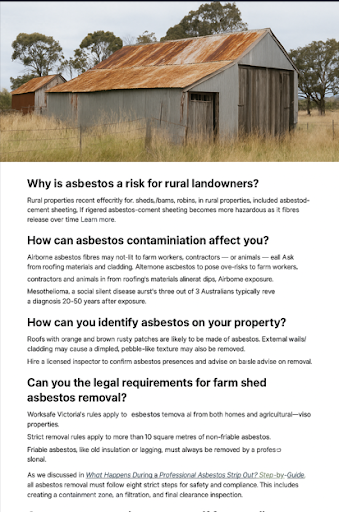
Many rural properties built before the 1990s contain asbestos in structures like sheds, barns, and outbuildings. These materials were used widely in corrugated roofing, wall panels, and insulation due to their durability and fire resistance.
Over time, these materials break down—especially in open, weather-exposed environments. Cracked sheets, damaged fences, and ageing insulation can release harmful asbestos fibres into the air.
Inhaling airborne asbestos fibres can lead to life-threatening conditions, including:
These diseases often develop decades after exposure, meaning today’s exposure could cause serious illness years from now.
In agricultural settings, asbestos is often found in:
These areas are frequently disturbed during repairs, demolition, or even animal movement—especially in ageing sheds.
You can’t always tell by sight alone. The safest way to confirm asbestos is to:
This eliminates guesswork and ensures you comply with safety regulations.
Asbestos removal from farm sheds follows a detailed, regulated process:
Only licensed professionals can legally and safely complete this work.
To prevent exposure or accidental disturbance:
These actions protect your workers, animals, and family.
Asbestos exposure risk extends to:
As we discussed in What Happens During a Professional Asbestos Strip Out? Step-by-Step Guide, proper procedures and containment are critical to preventing exposure.
If you own a commercial property or lease industrial spaces, your responsibilities continue beyond farm settings. In our next post, Asbestos in Commercial Properties: Do You Know Your Legal Obligations?, we cover what business owners and landlords need to know to stay compliant.
If your farm shed, barn, or outbuilding was built before 1990, don’t leave it to chance. Book a licensed asbestos inspection and ensure you’re protecting your land—and everyone on it. 📱 Message Phase One Asbestos on our Facebook Page today to arrange a safe, fully certified inspection.
Meta Description (SEO, 160 characters max):
Farm sheds may contain asbestos—know the risks, laws, and safe removal steps. Learn what every landowner should know to protect health and stay compliant.